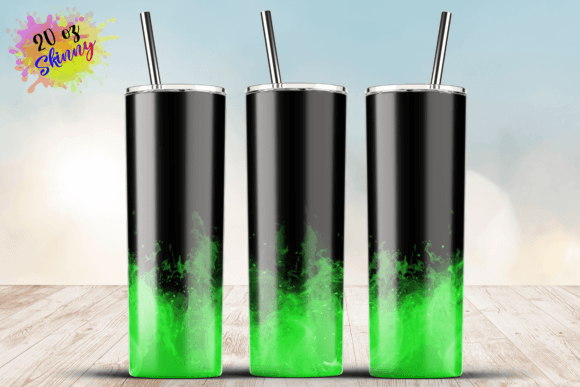
Green Fire Flame for 20oz Skinny Tumbler
As a designer who’s stitched hundreds of custom projects—from boutique baby onesies to Etsy best-selling tote bags—I opened Green Fire Flame for 20oz Skinny Tumbler expecting something bold, but what stood out immediately wasn’t just the color or shape—it was the *intention*. This isn’t a generic flame motif slapped onto a template. It carries motion, heat, and a controlled intensity that reads as both modern and artisanal. The tapering edges, layered curves, and subtle asymmetry suggest thoughtful digitizing—not auto-traced clipart. That matters when you’re building trust with customers who pay extra for “handmade” authenticity.
First Impressions: Mood, Scale, and Real-World Fit
The design feels like it belongs on something tactile and personal: a barista’s embroidered apron, a teen’s custom sweatshirt, or a limited-run patch for a music festival merch line. Its vertical rhythm mirrors the lean profile of a 20oz skinny tumbler—but don’t let the name limit your thinking. I tested it scaled down by 30% on a linen tea towel mockup and up by 25% on a cotton canvas tote, and it held clarity in both. The flame’s core has enough negative space to avoid fill-stitch mud, while the outer flickers use fine satin stitch lines that suggest movement without demanding ultra-fine thread or micro-hooping.
Where It Shines (and Where It Asks for Attention)
Green Fire Flame for 20oz Skinny Tumbler excels on stable, medium-weight fabrics: cotton twill for patches, midweight fleece for sweatshirts, and structured canvas for tote bags. On a recent batch of embroidered kitchen towels for a local café, it stitched cleanly with standard tear-away stabilizer—no puckering, no thread breaks. Customers commented on how “vibrant but not loud” it felt—proof that strong graphic energy doesn’t require visual noise.
That said, proceed thoughtfully with stretchy knits (like baby onesies or raglan tees) or highly textured surfaces (bouclé, corduroy, or quilted jackets). The flame’s tapered tips and inner contours rely on consistent fabric tension. On a curved cap front, I’d recommend repositioning the design slightly lower than center—and confirming the file includes underlay stitching. If it doesn’t, add light running-stitch underlay manually before production runs.
Dark fabrics? No issue—this design has built-in contrast awareness. The green isn’t fluorescent; it’s deep emerald with warm undertones, so it reads clearly against navy, charcoal, or even black denim. For light backgrounds, stick with matte or semi-gloss green thread—avoid high-sheen rayon if you want the handmade warmth to read over digital precision.
Commercial Use & Customer Perception
I used Green Fire Flame for 20oz Skinny Tumbler as the hero motif on a set of personalized holiday gift bundles—each included a monogrammed sweatshirt, matching embroidered pillow cover, and a tumbler sleeve. Buyers didn’t just notice the flame; they associated it with “energy,” “craftsmanship,” and “intentional gifting.” That subtle emotional lift is why this works so well for small shop branding and Etsy listings: it adds narrative weight without needing text.
For craft business owners, it’s a versatile anchor design. Pair it with minimalist initials for a gender-neutral baby gift. Flip it horizontally and stitch it mirrored on both sides of a reversible apron. Use it as an applique base—cut the flame shape from contrasting fabric, then outline with satin stitch for dimension. Just remember: if you’re selling finished products commercially, verify the license permits resale of physical items. Since this is a digital embroidery file listed under Crafts > Graphics, always double-check usage rights before listing on platforms with strict IP policies.
Practical Designer Notes Before You Stitch
- Test first—Always run a sample on scrap fabric matching your final product’s weight and weave. Watch how the flame’s tips behave on your machine’s default tension settings.
- Stabilizer matters—Use cut-away for knits, tear-away for wovens, and fusible + tear-away for lightweight linens. Skip the “stabilizer-free” shortcut here—the outer flickers need support.
- Check stitch density—If your software shows heavy fill areas near the flame’s base, consider reducing density by 5–8% for breathability on apparel.
- Hoop size—Even though it’s designed for tumblers, confirm the file fits your most-used hoop. Some versions may push 4x4 boundaries; if yours does, resize proportionally rather than stretching.
- Thread color contrast—Try it in olive, forest, and kelly green on the same fabric swatch. Lighting changes everything—what reads rich indoors may look muted in natural light.
- Mock it digitally—Drop the design into a printable mockup of your actual product (tote, cap, towel). Does it sit comfortably in the visual “sweet spot”? Does it scale naturally next to logos or text?
- Wash testing—If using on baby items or kitchen textiles, stitch a sample, wash it three times on gentle cycle, then assess fraying or distortion at the flame’s thinnest points.
Final Thought: A Design That Earns Its Place
Green Fire Flame for 20oz Skinny Tumbler isn’t just another machine embroidery design—it’s a quiet confidence builder. It elevates a simple product into something memorable without shouting. For Etsy sellers launching their first embroidered collection, for craft fair vendors refining their booth story, or for designers sourcing reliable design assets for client work, this flame delivers consistency, clarity, and character. It doesn’t ask for special treatment—but it rewards attention to detail. And in handmade work, that balance—between ease and intention—is where real value lives.