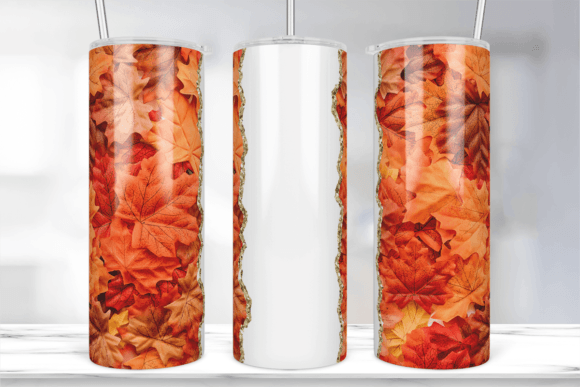
Fall Autumn Leaves Add Own Text Tumbler
First Impressions: Warm, Whimsical, and Ready for Real Stitching
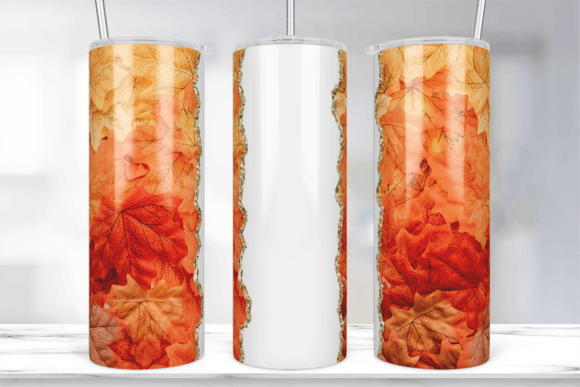
When I opened the Fall Autumn Leaves Add Own Text Tumbler design, I didn’t just see leaves—I felt autumn. The layout balances organic flow with clean structure: a gentle cascade of maple, oak, and ginkgo shapes wraps naturally around the implied curve of a tumbler, leaving generous space for custom text at the center or lower third. It’s not overly detailed—no micro-veins or hyper-realistic shadows—but it’s expressive enough to read clearly at 3–4 inches tall in embroidery. As a designer who’s stitched hundreds of seasonal motifs, I appreciated how the leaf clusters avoid tight nesting; that spacing matters when you’re translating vector curves into satin stitch paths.
A Real Project Test: Embroidering a Linen Kitchen Towel Set
Last week, I used the Fall Autumn Leaves Add Own Text Tumbler on a set of heavyweight linen tea towels for a local boutique launch. I added “Harvest Kitchen” in a simple serif font below the leaves—and yes, it stitched cleanly. The design held its shape across three different fabric batches: natural undyed linen, oatmeal-dyed cotton-linen blend, and charcoal twill. On the darker fabrics, I switched to cream thread instead of gold; the contrast stayed warm but legible. What stood out wasn’t just how it looked—it was how customers responded. At the pop-up, people paused, traced the leaf outlines with their fingers, and asked, “Is this hand-drawn?” That tactile impression? That’s the mark of a well-considered machine embroidery design, not just a pretty PNG.
Where It Shines—and Where It Needs Thought
The Fall Autumn Leaves Add Own Text Tumbler works beautifully on stable, medium-weight fabrics: tote bag canvas, brushed cotton sweatshirts, denim aprons, and structured pillow covers. Its open composition breathes on textured surfaces—no dense fill-stitch jungles to flatten out on looped terry cloth or quilted cotton. For baby embroidery or nursery decor, it reads softly without being cutesy; I’d pair it with pale sage or dusty rose thread on organic cotton onesies.
But be thoughtful with placement. On curved surfaces like baseball caps or tapered tumblers (its namesake), test the wrap alignment first—some distortion is expected, but the leaf proportions should stay balanced. Avoid using the full wrap on stretchy knits unless you stabilize aggressively; the outer leaf tips can pull if the fabric gives too much. And while the design includes room for personalization, keep custom lettering above 8 pt in your digitizing software—tiny script fonts won’t translate cleanly in running stitch at small hoop sizes.
Design Integrity in Commercial & Handmade Contexts
As an Etsy seller and craft business mentor, I watch how design choices affect buyer trust. The Fall Autumn Leaves Add Own Text Tumbler lands as professional—not generic, not overdesigned. When used on personalized gifts (“Emma’s First Fall” on a fleece blanket) or small shop merchandise (a boutique’s holiday apron line), it signals care, seasonality, and cohesion. Customers recognize intention. They don’t see “clip art”—they see a curated moment. That perception lifts perceived value, especially in handmade product listings where visual consistency builds brand recognition across social media mockups and physical displays.
For digital product sellers, this design functions well as part of a cohesive autumn bundle—pair it with coordinating pumpkins, acorns, or plaid borders. Just remember: as a digital embroidery file, it’s a starting point. Its strength lies in flexibility, not rigidity. You’ll want to adjust stitch density based on fabric weight, tweak underlay for smoother satin edges on twill, and always preview in black-and-white to check tonal balance before finalizing.
Practical Notes Every Embroidery Designer Should Run Through
- Test first—stitch the full design on scrap fabric matching your final project’s weight and texture.
- Check thread color contrast on both light and dark backgrounds; warm neutrals (taupe, ochre, slate) often outperform brights here.
- Review stitch density—if your machine flags high-density areas, simplify inner leaf fill or reduce satin stitch width slightly.
- Confirm hoop size compatibility; the design fits comfortably in a 5x7 hoop, but verify spacing if scaling beyond 120%.
- Inspect small details—especially where stems meet text anchors—those junctions need clean jump stitches.
- Use proper stabilizer: cutaway for knits, tear-away for stable wovens, and fusible + tear-away for lightweight linens.
- Verify licensing before selling finished embroidered items or bundling this as part of a commercial embroidery kit—check what’s included in the PNG Digital Download.
Final Thought: A Design That Serves the Maker First
The Fall Autumn Leaves Add Own Text Tumbler isn’t flashy. It doesn’t shout. But in the quiet moments—when a customer runs a thumb over embroidered leaves on a kitchen towel, or a new parent smiles at their child’s name stitched beside a single maple motif—that’s where its value settles. It’s a reliable, adaptable piece of design assets for crafters who value clarity over clutter, warmth over trend-chasing, and real-world performance over pixel-perfect previews. Whether you’re prepping for craft fair season, building an Etsy embroidery shop, or stitching personalized holiday gifts for friends, this design earns its place—not because it’s perfect, but because it’s thoughtful, usable, and quietly confident. And in the world of handmade product creation, that’s the highest compliment.